Fontanelle Gallery
Circa 2009
Fontanelle Gallery offered many outstanding shows from 2008 -2010 to Portland Oregon residents and visitors alike.
This used to be their website.
Content is mostly from the site's 2009 archived pages.
The Gallery closed in 2010.
205 SW PINE STREET
PORTLAND OR 97204
mail@fontnanellegallery.com
503.274.7668.
OPEN HOURS WED - SAT 12-6
Fontanelle Gallery: Closing!

Juliana Bright's "Here Mama, Here It Is"
Matt Stangel | Jan 15, 2010
After a year and a half in business, Fontanelle Gallery will close at the end of the month. The press release announcing Fontanelle's closure was admittedly sad, though positive overall, emphasizing a capital of success built over the course of the gallery's run.
Yesterday afternoon I stopped by Fontanelle and talked to Jess Fogel, co-owner and director of the gallery. She maintained the positivity of her press release, but admitted that the weakened economy "played a big part" in the closing— adding that her and co-owner Leslie Miller are parting on good terms, both looking forward to future projects. Fogel wasn't ready to disclose the specifics of her future plans at the time of our chat.
The upside?— there's still art on the walls, if only for a few more weeks. Fontanelle's current exhibit, Our Songs of Experience, features works on paper by Juliana Bright. Not only do Bright's watercolors capture the spirit of Fontanelle (which often hosted illustrative works), but they also make an unexpected literary reference, paying homage to William Blake's Songs of Experience. This Blake reference does a lot to inform Bright's stylistic choices; the artist appears to draw inspiration from the illustrations accompanying Blake's poems.
Additional silver lining— Fontanelle's existence is well documented in Fontanelle: Year One, a book containing images of the art displayed during the gallery's first year in business (including essays by the featured artists).
Fontanelle (205 SW Pine Street) will host a closing party on the 22nd, from 7-9 pm.
What a disappointment to learn that the gallery was closing. I always would drop in to see what they were exhibiting whenever I was in Portland seeing clients for the progressive IT company I work for on the East coast. The most memorable exhibit I can remember was "Nothing". To this day I can recall that experience. The art was amazing - I especially like the sculpture entitled "The experience of nothing begins here..." A group of strangers spontaneously began discussing the idea of nothing, and the philosophic context of scholarly arguments related to nothing. Reminds me of this post by Rev Sale. That conversation had an impact on me because it was so enjoyable even though it was about nothing - learn more about nothing. Several years ago, my client took me to an opening at the Fontanelle. And ever since that time I would visit the gallery when I was in town. Their closing forced me to expand my gallery viewing which has been rewarding.

Some Archived POSTS 2008-2009
August 2008 - The Grand Opening!
We are thrilled to be settling into our brand new digs and to announce the grand opening of Fontanelle Gallery in donwtown Portland Or! You are invited to juin us for cupcakes and champagne to kick off our first exhibition All I Can Do is Dream
September 2008 - We are officially open! Yay!
The opening Party All I Can Do is Dream was totally awesome!
Friends and lovers and hometown heroes showed up to give us hugs and high fives. We had 200+ people come through, as well as five bouquets flowers, 148 cupcakes, and 15 bottles of champagne. You guys are rad!
October 2008 - Parlour Shop!
We are hard at work searching the world over to find the creme for our Parlour Shop!Expect to see inky octopus pillows from Wonder Thunder of Seattle, Knitted animal brooches from Sarah McNeil of Melbourne, spectacular prints from Julia Pott of London, and crazy sexy cooldrawings from Cat Lauigan of Brooklyn in the very near future!
December 21, 2008 - Fontanelle is closed for the holidays!
We have returned to the homeland for friends and family and fun!
Please join us when we reopen in 2009 with an Oregon Painting Society redux and special new performance on January 8th!
Posted by Fontanelle
December 11, 2008 - NEWS NEWS NEWS NEWS
Jess is still in Berlin! She just went to the Bongout showroom this evening for the opening of Alles Muss Raus, a rad group show! If you have any special Berlin gems of knowledge, please pass them along!
Online Parlour
The Parlour is online! Get cozy! Support awesome artists and artist-run spaces! Keep the community alive with your love and support!
Oregon Painting Society
Performing at Rotture this Friday, December 12th 9pm!
315 SE 3rd Avenue, Portland, Oregon!
http://www.rotture.com
Prints for PICA
We are delighted for their sixth year printmaking marathon and benefit art sale. PICA has invited a tons of Fontanelle's friends and family to participate in the art making, including Leslie! Oh my! The benefit sale takes place Sat., Dec 13th 6-9pm. Check out PICA's website for more details.
http://www.pica.org/programs/detail.aspx?eventid=456
Posted by Fontanelle
Friday, January 30, 2009
October 31, 2008 - Daniel Long in the Oregonian

We were psyched to read Brian Libby's great review of Daniel's show in today's Arts and Entertainment section of the Oregonian! I Heard It Through The Grapevine has been such a fun exhibition and we hope that you'll have the chance to come see it before it comes down!
Saturday, January 31, 2009
January 6th, 2009 - 2009 Calendars are here!
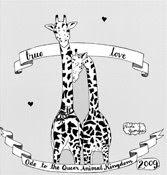
Nicole J. Georges' Queer Animal Kingdom calendaris as adorable as it is enlightening. Rejoice in the happiness of companionship and love as you flip through the super sweet drawings that fill each page along with reminders for each of your favorite holidays. A true bargain at only $9 each, you might even want to frame the drawings at the end of the year!

Claire Nereim takes a different approach to the calendar year! She presents us with the Seasonal Fruits of California! One ripening fruit for each month of the year! This isn't a traditional calendar with dates that will change from year to year, but instead is a lovely full-color silkscreen print that you will enjoy for years to come! $45 each.
Posted by Fontanelle
The Parlour Shop is a division of Fontanelle Gallery, a cozy gallery space located in downtown Portland, OR.
Fontanelle collaborates with artists who share our aesthetic sensibilities and lifestyle, steeped in DIY culture and an appreciation for history. Our gallery program focuses on works on paper, installation, sculpture, and artworks that utilize traditional craft techniques but yield a modern result.
The Parlour Shop is our in-house boutique, offering prints, editions, publications, and original artwork by artists from Portland as well as hand selected pieces from around the world.
JANUARY OPEN HOURS:
BY APPOINTMENT OR BY CHANCE
Email us if you want to stop in
mail@fontanellegallery.com
OUR SONGS OF EXPERIENCE
Julianna Bright
December 3rd, 2009 - January 30th, 2010
Preview Wednesday, December 2nd, 6-8pm
Opening reception Thursday, December 5rd, 6-9pm
With special musical performance by the Golden Bears 7:30pm
Fontanelle Gallery is pleased to present Our Songs of Experience, an exhibition featuring new work in watercolor and ink by Portland-based artist Julianna Bright.
Julianna's lively watercolor and ink drawings feature a delicate allegorical narrative, punctuated with mothers, daughters, rabbits, and specters of death. Bringing to mind works by William Blake and Henry Darger, Bright investigates her own philosophies through a world of fables where children hold the key to unlocking emotions of hunger, vigor and truth.
Julianna will perform with her band The Golden Bears on opening night, Thursday, December 3rd at 7:30pm. The band will be playing songs from the new, yet to be released album, 'Our Songs of Experience' whose lyrical content was developed alongside the paintings for this show. Local clothing designer Jess Beebe will costume the band for the performance.
Julianna Bright was born in Los Angeles, CA and spent many years in Orange County and the Bay Area where she received a Bachelor of Arts from UC Berkeley. In 1995, she relocated to Portland, OR, where she currently lives and works. She has previously exhibited at galleries such as Charmingwall in New York, Needles & Pens in San Francisco, Motel Gallery in Portland, and Tinlark Gallery in Hollywood, CA.
Our Songs of Experience will be on view at Fontanelle Gallery, 205 SW Pine Street (between 2nd and 3rd Avenue) December 2, 2009 - January 30, 2010. Please contact the gallery for more information.
Tuesday, November 17, 2009
Queer Gaze

Today, Tuesday, November 17th, from 11:30am - noon PST, I will join the illustrious Eva Lake on KBOO's ART FOCUS program. We will be discussing the exhibition itself, touching on the history of feminist art and queer culture, as well as a more in depth discussion of several of the pieces in the show. You can tune in, here in Portland on 90.7fm or stream it live online http://www.kboo.org/.
Tomorrow, Wednesday, November 18th, from noon - 1:00pm PST, Lorenzo Triburgo, Megan Holmes, and I will join Chris Haberman for a live broadcast webTV interview on PDX ART SCENE. We will be talking about Fontanelle and Queer Gaze. Lorenzo and Megan will each have a chance to talk about their works in the show. http://www.pdxartscene.com/index.php/artscene-tv/art-talk
Lastly, please join us this Thursday, November 19th, from 8pm - 10pm at Fontanelle for another look at Queer Gaze. We're hosting a party, with live musical performances by Play/Start and Boy Joy.
The exhibition will be on view for a couple more weeks. If you are not here in Portland, fear not, for a virtual peek at the exhibition is available on our website
Preview Wednesday:
November 4th, 6-8pm
Opening reception:
Thursday, November 5th, 6-9pm
Musical performances Thursday:
November 19th, 8pm
The Fontanelle Gallery press release reads:
 “Fontanelle Gallery is pleased to present Queer Gaze, a group photography exhibition featuring images of queer people by queer photographers. This show offers a new examination and response to theories of “male gaze”, as originally described by Laura Mulvey as the cinematic depiction of voyeurism and objectification of a female by a heterosexual male viewer. Queer Gaze explores the gaze from woman to woman or queer to queer, as well as the way that many photographers use their own visage or that of their friends to subvert traditional expectations of portraiture.
The act of taking ownership of one’s own identity and personal beliefs and how these beliefs are enacted in the public realm is a political act that helps shape modern feminism. Here we present a collection of perspectives and experiences that will be at once informative and titillating, while also empowering.
Feminist photographers exploring the theory of male gaze have often turned the camera on themselves, demanding that viewers take notice of their role of dominance in how they are presented and viewed. By utilizing elements of masquerade, role-playing and societal commentary as devices to investigate identity through self-portraiture, many photographers are able to explore their own personal politics. Clearly, the issue of self-representation is not restricted to literal self-portraiture. The issue is not what one looks like, but how and by whom one is represented.”
GOOD HERB
New work by Jess Hirsch
October 1st-31st, 2009
Fontanelle Gallery is pleased to present Good Herb, an exhibition featuring new drawings and installation by Portland artist Jess Hirsch.
Hirsch crafts delicately rendered pencil drawings of alternative medicine practitioners, healers, shamans, and the herbs that they harvest from the wild for medicinal use. Hirsch's drawings and sculptures serve as a referential library that represents the vivid imagery discovered within the text of her investigative research. The depictions are not intended to romanticize the exotic, nor convey anthropological studies, but rather document the practices that appeal to Hirsch for personal exploration.
Good Herb is a journey into alternative medicine through academic research, experimentation, as well as trial and error. Research has been developed from oral accounts, group meditations, books on Native American medicine and Mexican Curanderismo, YouTube tutorials for preparing herbs, and seeking advice from local practitioners. This project encourages self-education and the many facets of alternative health care available to the public for little or no cost. Health insurance is not required.
Fontanelle will host a special Healing Skillshare Workshop at the gallery on Saturday, October 17th at 2pm.
Jess Hirsch was born in Minnesota and received a Bachelor of Fine Arts from Lewis and Clark University in 2007. She has exhibited at Milepost 5, Gallery Homeland, and The Artistry in Portland. She is co-founder of Homeschool, a nomadic art gallery based in Portland, and co-creator of the Portland Healing Project, a healing workshop series and online resource for artists and low-income families to find affordable healthcare through alternative medicine.
LESBIAN ART SHOW
Azsa West & Mary McAllister
June 4-27, 2009
Fontanelle Gallery presents Lesbian Art Show, a Dada-inspired exhibition that explores lesbian culture and features mixed media collage, drawings, sculpture, and installation, by Azsa West and Mary McAllister.
Azsa West and Mary McAllister cohabitate in majestic Portland, Oregon where they met and fell in love. They belong to a group of talented young comrades who inspire each other through conversation, ambition, and creativity. Their activities are infused with the desire to strive towards a unique and personal definition of being lesbian. West and McAllister are interested in documenting this ethos, from studying its roots as represented in historical literature and photography, to producing and participating in contemporary queer culture.
Lesbian Art Show represents the timeless and chaotic style of Dada, the intimacies of Left Bank lesbians in the 1920s, and the revolutionary spirit of queer ephemera combined with personal experiences from a recent European adventure, lesbian lifestyles, strange habits, the need for order and documentation, large type, and perhaps most importantly, true love. The works on view often utilize textual diagrams to illustrate ideas. Through graphs, maps, exquisite corpse, and Venn diagrams, they deliver their observations and revelations. In addition, there will be an installation constructed collaboratively with Aubree Bernier-Clarke, and finessed with respect for historical representation and compassion for community.
Azsa West attended California College of the Arts and the Pasadena Art Center where she studied art direction, photography and book arts. She is currently an art director at Wieden+Kennedy in Portland and recently had several drawings featured in Girls Like Us Magazine published out of Amsterdam. Mary McAllister studied photography and printmaking at Hampshire College in Amherst, Massachusetts. She is one of the co-founders and dj’s of Gaycation, a popular monthly dance party in Portland.
BIG BEAUTIFUL COLOR
Mark Warren Jacques
February 5-28, 2009
Fontanelle Gallery presents Big Beautiful Color, an exhibition featuring interactive installation, painting, and sculpture by Portland artist Mark Warren Jacques.
Mark Warren Jacques lives within a web of art makers, musicians, skateboarders, and backyard revolutionaries. This close-knit community thrives on representing a sort of whimsy that harnesses the energy of idealism and is rooted in earthy spirituality. Lest you conclude that he lives in a world of naïvete, Jacques will surprise you with his gusto to love, question, and commit himself to the realities of hard work, ambition, and responsibility to his community.
For his exhibition Big Beautiful Color, Jacques will construct an interactive large-scale teepee of cast-off slatboard set atop a colorful platform and against a backdrop of multi-hued streamers. Visitors to the exhibition will be invited to enter the teepee where atmospheric psych jams, recorded by his housemate Blake Anthony Ray Miller, will filter from tape deck to a vintage Alamo amplifier. Within these walls, there is a smooth transition between the bustle of the downtown streets and a more transcendent space where one can leave their cares behind and enter a world of inspired meditation.
In addition to the installation, fourteen new paintings and sculptures will fill the gallery space. Imagery includes prismatic symbols of nature, metaphysical acculturation, and a celebration of the spiritual universe that connects all of us – from our local collectives to a global community.
At the opening, there will be a peaceful protest enacted by distributing picket signs, hand printed locally by Keeganmeegan Press, each carrying slogans mixing Jacques’ own artistic and political ideals.
Mark Warren Jacques studied art at the Columbus College of Art and Design in Columbus, OH. He is a member of the Together Gallery collective in Portland’s Alberta Arts District and has upcoming solo exhibitions at Rare Device in San Francisco and Little Bird Gallery in Los Angeles.
ALL SHOWS Past & Present
QUEER GAZE
Sarah Baley, Erica Beckman, Tammy Rae Carland, Zackary Drucker & A.L. Steiner , Luke Gilford, Grit Hachmeister, Megan Holmes, Angela Jimenez, Molly Landreth, Amos Mac, Finn Paul, Emily Roysdon, Eric Sellers, Lorenzo Triburgo, and Azsa West.
November 5-28, 2009
GOOD HERB
Jess Hirsch
October 1st - 31st, 2009
REAL LIFE AND OTHER MYTHS
Coral Silverman
September 3rd - 26th, 2009
THE ART OF TOURING
Alissa Anderson (Vetiver), Hannah Mae Blair, Sharon Cheslow, Mia Clarke (Electrelane), Jem Cohen, Erika Spring Forster (Au Revoir Simone), Rebecca Gates, Emma Gaze (Electrelane), Megan Holmes, Andy Moor (The Ex), Tara Jane Oneil, Jean Smith (Mecca Normal).
August 6th - 29th, 2009
MIDORI HIROSE & JOSH ORION KERMIET
Midori Hirose & Josh Orion Kermiet
July 2 - August 1, 2009
LESBIAN ART SHOW.
Azsa West & Mary McAllister
June 4th - 27th, 2009
IF I WEREN'T HERE, THEY WOULD BE
Shawn William Creeden
May 7th - 30th, 2009

A HUNTER'S RETURN TO THE GOOD COUNTRY
Jessie Bean, Amy Chan, Rachel Denny, Jessica Polka, Brieana Ruais, Michael Russem and Wesley Younie.
April 2nd - 30th, 2009
LONG LIVE THE EPHEMERAL
Curated by Ryan Jacob Smith
March 5 - 28, 2009
BIG BEAUTIFUL COLOR
Mark Warren
February 5 - 28, 2009
OREGON PAINTING SOCIETY
Ana Briseno, Birch Cooper, Liam Drain, Barbara Kinzle, Brenna Murphy, Julia Perry, Molly Pringle, Nate Shapiro, Eliza Sohn, and Jason Traeger.
December 2008 - January 31, 2009
AUTUMN SWEATER
Dana Dart-McLean, Mark Delong, Hollie Dzama, Jess Fogel, Nicole Georges, Jess Hirsch, Denise Kupferschmidt, Jason Overby, Dawn Riddle, Suzanne Sattler, Suzannah Sinclair, and Josh Slater.
November 5-29, 2008
I HEARD IT THROUGH THE GRAPEVINE
Daniel Long
October 1 – November 1, 2008
ALL I CAN DO IS DREAM
Lisa Beyer, Kristie Louderbough, Meg Peterson, and Shanon Schollian
September 4 - October 27, 2008

More Background On FontanelleGallery.com
FontanelleGallery.com preserves the story of Fontanelle Gallery, an independent contemporary art space that operated in downtown Portland, Oregon, during the economically turbulent period from 2008 to 2010. Although its physical life was brief, Fontanelle developed a distinctive identity through exhibitions centered on illustration, works on paper, photography, installation, sculpture, craft techniques, queer culture, feminist perspectives, music, and Portland’s do-it-yourself creative community.
The gallery was located at 205 SW Pine Street in Portland’s Old Town area, between Southwest Second and Third avenues. Its location placed it within walking distance of the Skidmore Fountain, the historic Multnomah Hotel, the Burnside Bridge, the central downtown retail district, and numerous restaurants, music venues, studios, and independent businesses.
Fontanelle was not a large museum, conventional commercial gallery, or tourist attraction. It functioned more like an intimate cultural meeting place. Exhibitions were often accompanied by performances, workshops, publication projects, parties, artist talks, and community activities. This combination made Fontanelle representative of a period when Portland’s independent art culture depended heavily on small, artist-run spaces.
The current FontanelleGallery.com is best understood as a historical reconstruction rather than the active website of an operating gallery. It brings together descriptions, announcements, photographs, and exhibition information associated with the original gallery. The business itself closed at the end of January 2010.
Ownership and Direction
Fontanelle Gallery was co-owned and operated by Jess Fogel and Leslie Miller. Contemporary reporting identified Fogel as the gallery’s co-owner and director, while Miller was involved in its programming, artistic identity, and community activities.
The two founders positioned Fontanelle as more than a room where objects were hung and sold. Their programming suggests that they were interested in creating a recognizable creative environment based on personal relationships, collaboration, experimentation, and shared aesthetic interests.
A January 2010 Portland Mercury report on the gallery’s closing described Fogel and Miller as parting on good terms and looking forward to other projects. Fogel also acknowledged that the weakened economy played a substantial role in the decision to close.
That admission is important to understanding Fontanelle’s history. The gallery opened in 2008 as the global financial crisis was affecting consumer spending, employment, arts funding, retail activity, and commercial property markets. Small galleries are particularly vulnerable during economic contractions because they often operate with limited reserves while depending on discretionary art purchases, event attendance, and the unpaid or underpaid labor of their founders.
Fontanelle nevertheless remained active for approximately a year and a half, presenting a nearly continuous schedule of exhibitions and events.
Opening and Early Development
Fontanelle announced its grand opening in 2008 with the exhibition “All I Can Do Is Dream,” featuring Lisa Beyer, Kristie Louderbough, Meg Peterson, and Shanon Schollian.
The celebratory nature of the opening reflected the gallery’s informal, community-oriented personality. According to gallery accounts, more than 200 visitors attended, consuming 148 cupcakes and 15 bottles of champagne. The gallery described the crowd as including friends, supporters, and local creative figures rather than treating the event as a formal invitation-only art-world reception.
This accessible atmosphere became part of Fontanelle’s identity. It was a gallery where an opening could resemble a neighborhood gathering, performance event, independent craft fair, or music show.
The founding exhibition was followed by Daniel Long’s “I Heard It Through the Grapevine,” which received attention in The Oregonian. Later programming included the group exhibition “Autumn Sweater” and a presentation by the Oregon Painting Society, an experimental Portland collective combining visual art, costume, performance, music, technology, and collaborative environments.
By early 2009, the gallery had established a monthly rhythm and a clear preference for artists whose work crossed conventional disciplinary boundaries.
Artistic Mission and Aesthetic
Fontanelle described itself as collaborating with artists who shared its aesthetic sensibilities and a lifestyle shaped by do-it-yourself culture and an appreciation for history.
Its program focused on works on paper, installation, sculpture, and traditional craft processes used in contemporary ways. That description helps explain the gallery’s unusually broad exhibition history.
Illustration and drawing were prominent, but Fontanelle was not simply an illustration gallery. Its shows incorporated photography, collage, printed matter, textiles, performance, music, furniture-like installations, participatory environments, publications, and community workshops.
The gallery’s interest in traditional craft did not appear nostalgic. Instead, artists used drawing, printing, sewing, collage, hand lettering, and sculpture to address identity, politics, sexuality, health, spirituality, relationships, music, and community.
This mix placed Fontanelle within a wider Portland culture that valued handmade objects, artist publications, independent record labels, small presses, alternative galleries, bicycle culture, craft markets, and collaborative creative projects.
The Parlour Shop
An important part of the Fontanelle concept was the Parlour Shop, an in-house boutique offering prints, limited editions, publications, original artworks, accessories, and handmade objects.
The shop featured work by Portland artists as well as items selected from artists and designers in other cities and countries. Announcements mentioned products such as illustrated prints, knitted animal brooches, pillows, calendars, publications, and small artworks.
Artists and makers associated with the shop included Sarah McNeil of Melbourne, Julia Pott of London, Cat Lauigan of Brooklyn, Nicole J. Georges, and Claire Nereim.
The Parlour Shop served several purposes. It gave visitors a way to support artists without purchasing a major work, helped Fontanelle diversify its income, and connected the gallery to the growing international market for affordable prints and handmade design objects.
Its combination of gallery and boutique also reflected Portland’s creative economy in the late 2000s, when distinctions among art, craft, illustration, design, publishing, fashion, and independent retail were becoming increasingly fluid.
Fontanelle eventually promoted an online version of the Parlour, encouraging supporters to purchase work and help sustain artists and artist-run spaces. This online component allowed the gallery to reach people beyond Portland, although no reliable public traffic statistics survive to indicate how many shoppers used it.
Major Exhibitions
Fontanelle presented an ambitious schedule during its short life. Among its earliest exhibitions were “All I Can Do Is Dream,” Daniel Long’s “I Heard It Through the Grapevine,” “Autumn Sweater,” and a presentation by the Oregon Painting Society.
In February 2009, Mark Warren Jacques presented “Big Beautiful Color,” an exhibition of painting, sculpture, and interactive installation. Jacques constructed a large teepee-like structure from discarded slatboard, accompanied by colorful streamers, recorded psychedelic music, a vintage amplifier, paintings, and sculptural objects.
Visitors were invited to enter the installation, temporarily moving from the noise of downtown Portland into a more contemplative environment. The opening also incorporated hand-printed protest signs carrying artistic and political slogans.
The exhibition captured several characteristics associated with Fontanelle: resourcefulness, participation, music, spirituality, humor, communal experience, and the transformation of inexpensive materials.
Other 2009 exhibitions included “Long Live the Ephemeral,” curated by Ryan Jacob Smith, and “A Hunter’s Return to the Good Country,” featuring Jessie Bean, Amy Chan, Rachel Denny, Jessica Polka, Brieana Ruais, Michael Russem, and Wesley Younie.
Shawn William Creeden followed with “If I Weren’t Here, They Would Be.” The summer brought exhibitions involving Azsa West, Mary McAllister, Midori Hirose, and Josh Orion Kermiet.
Later programs included “The Art of Touring,” “Real Life and Other Myths,” Jess Hirsch’s “Good Herb,” the group photography exhibition “Queer Gaze,” and Julianna Bright’s “Our Songs of Experience.”
Lesbian Art Show
One of Fontanelle’s most culturally significant exhibitions was “Lesbian Art Show,” created by Azsa West and Mary McAllister.
The exhibition combined mixed-media collage, drawing, sculpture, installation, historical research, queer ephemera, personal experience, diagrams, maps, large typography, and references to Dada and the lesbian communities of 1920s Paris.
West and McAllister were interested in documenting and inventing contemporary lesbian culture while examining how identity is preserved through photographs, literature, personal archives, friendships, design, nightlife, travel, and everyday habits.
Their use of graphs, Venn diagrams, maps, collaborative installations, and documentary material made the exhibition both playful and analytical. It treated lesbian experience not as a narrow theme but as a living cultural system shaped by history, romance, community, humor, politics, and self-representation.
The exhibition also reflected Fontanelle’s willingness to foreground queer artists and subjects at a time when many commercial galleries treated LGBTQ-focused work as specialized or risky.
Queer Gaze
“Queer Gaze,” presented in November 2009, expanded Fontanelle’s engagement with queer representation. The group photography exhibition examined images of queer people made by queer photographers.
The exhibition responded to theories of the “male gaze,” particularly the idea that visual culture often positions women as objects viewed from a presumed heterosexual male perspective. “Queer Gaze” considered what changes when queer people control the camera, construct their own identities, photograph their communities, or use self-portraiture to resist conventional expectations.
Participating artists included Sarah Baley, Erica Beckman, Tammy Rae Carland, Zackary Drucker, A.L. Steiner, Luke Gilford, Grit Hachmeister, Megan Holmes, Angela Jimenez, Molly Landreth, Amos Mac, Finn Paul, Emily Roysdon, Eric Sellers, Lorenzo Triburgo, Azsa West, and others.
Several participants subsequently developed substantial careers. Zackary Drucker became internationally known for photography, performance, film, television, and work addressing gender and identity. A.L. Steiner and Emily Roysdon became widely exhibited contemporary artists. Amos Mac became known for photography, publishing, and transgender cultural documentation. Lorenzo Triburgo continued producing work about gender, landscape, incarceration, and representation.
Artist biographies and curricula vitae continue to list “Queer Gaze,” providing independent evidence that the exhibition occurred and remained meaningful within the participants’ professional histories.
Fontanelle supported the exhibition with radio discussion, online media appearances, a second-look event, and live musical performances. These activities turned the show into a continuing conversation rather than a static display.
Good Herb and Community Education
Jess Hirsch’s “Good Herb” demonstrated another side of Fontanelle’s program. The exhibition used pencil drawings, installation, sculpture, and research to investigate alternative medicine, healers, shamans, medicinal plants, and community health practices.
Hirsch drew from books, oral accounts, meditation groups, internet tutorials, Native American medicine, Mexican curanderismo, local practitioners, and personal experimentation.
Rather than presenting the subject solely as anthropology or romanticized spirituality, the project explored how people might educate themselves about accessible forms of care. It was particularly concerned with people who lacked health insurance or conventional medical resources.
Fontanelle complemented the exhibition with a Healing Skillshare Workshop. The event showed how the gallery treated exhibitions as opportunities for exchanging practical knowledge.
The workshop format also revealed the founders’ broader goal: to create connections among artists, visitors, performers, activists, and community members.
Music, Performance, and Portland’s Creative Networks
Music was closely integrated into Fontanelle’s activities. Exhibitions included performances, gallery events promoted concerts elsewhere in Portland, and several artists worked across visual art and music.
“The Art of Touring” specifically examined creative life associated with touring musicians and included contributors connected to bands such as Vetiver, Electrelane, Au Revoir Simone, The Ex, and Mecca Normal.
The Oregon Painting Society also blurred distinctions among concert, installation, performance, and exhibition. Its Fontanelle appearance was recognized in contemporary Portland art writing as an important presentation by a formalized collective.
For the final exhibition, “Our Songs of Experience,” Julianna Bright developed watercolor-and-ink works alongside music for an album of the same name. Her band, the Golden Bears, performed at the opening wearing costumes created by local designer Jess Beebe.
This interdisciplinary approach distinguished Fontanelle from galleries that kept music, design, craft, and visual art in separate categories.
Our Songs of Experience
“Our Songs of Experience,” featuring Julianna Bright, became Fontanelle’s final exhibition.
Bright’s drawings presented mothers, daughters, rabbits, mortality, emotional hunger, vitality, and allegorical narratives. Contemporary commentary compared the work to William Blake and Henry Darger, particularly in its combination of literary reference, delicate imagery, innocence, unease, and symbolic storytelling.
The exhibition’s combination of watercolors, music, costume, performance, and literary allusion summarized much of Fontanelle’s aesthetic. It was intimate, handmade, emotionally expressive, historically aware, and connected to Portland’s music community.
The gallery remained open long enough for the scheduled conclusion of the exhibition in January 2010.
Press and Media Coverage
Fontanelle received coverage from several Portland media and arts outlets despite its small size.
The Oregonian reviewed Daniel Long’s exhibition, giving the gallery early recognition in the city’s principal daily newspaper. Portlandart.net, an influential local art-news and criticism site, discussed Fontanelle exhibitions and documented the Oregon Painting Society presentation.
KBOO community radio’s “Art Focus” program covered “Queer Gaze,” with participants discussing feminist art, queer culture, representation, and individual works in the exhibition. PDX Art Scene also featured a live web interview involving Fontanelle and artists associated with the show.
The Portland Mercury reported the gallery’s closure and spoke directly with Jess Fogel about the economic circumstances, the founders’ relationship, and their future plans.
This coverage indicates that Fontanelle was visible within Portland’s independent cultural networks. However, no dependable attendance totals, revenue records, web-traffic measurements, or formal popularity rankings appear to be publicly available.
Its popularity should therefore be described qualitatively. Fontanelle attracted strong opening-night attendance, earned reviews and interviews, collaborated with recognized artists, and was remembered by members of the Portland arts community. It was influential within a particular creative audience rather than famous among the general public.
Audience and Visitor Experience
Fontanelle’s likely audience included artists, illustrators, photographers, musicians, designers, writers, queer community members, students, collectors of affordable art, independent publishers, and visitors interested in Portland’s alternative culture.
Its Wednesday-through-Saturday schedule and downtown address made it accessible to workers, tourists, and people visiting nearby Old Town businesses. Opening receptions and evening performances brought in audiences beyond normal gallery hours.
The gallery’s modest scale probably contributed to its social character. Visitors could encounter the owners, speak with artists, browse publications, attend a performance, or participate in a workshop without the institutional distance associated with a large museum.
Personal recollections preserved on the reconstructed website describe visitors returning whenever they came to Portland and remembering exhibitions years later. Such testimonials are anecdotal rather than formal reviews, but they help explain the emotional attachment that small independent spaces can generate.
Location and Proximity
The address at 205 SW Pine Street placed Fontanelle near the boundary of downtown Portland and the Old Town Chinatown historic district.
The nearby Skidmore/Old Town area contains some of Portland’s oldest surviving commercial architecture. The historic United Carriage and Baggage Transfer Building at 133 SW Pine Street, later home to Pine Street Market, stands only a short distance away. The former Multnomah Hotel, now an Embassy Suites, is at 319 SW Pine Street.
The gallery was also close to the Skidmore Fountain, waterfront, Burnside Bridge, Chinatown Gateway, Saturday Market area, and downtown transit routes. This was an appropriate setting for an experimental gallery because the area combined historic architecture, nightlife, restaurants, creative businesses, social-service organizations, tourists, and long-established Portland institutions.
Fontanelle’s location helped connect it to Portland’s cultural life, but downtown occupancy costs and the economic downturn would also have created pressure for a small business dependent on art sales.
Awards and Recognition
No major institutional awards specifically granted to Fontanelle Gallery were found in the available records. Claims that it won formal awards would therefore be unsupported.
Its recognition came instead through press attention, artist participation, community attendance, radio and web interviews, and continued mentions in artist biographies.
The quality of its roster is especially notable in retrospect. Several artists shown at Fontanelle went on to exhibit at significant museums, galleries, film festivals, universities, and international art events.
That does not mean Fontanelle can claim responsibility for their later success. It does show that the gallery’s organizers identified artists whose work was relevant to developing conversations about gender, identity, independent publishing, performance, craft, and interdisciplinary art.
The Closing of Fontanelle Gallery
Fontanelle announced in January 2010 that it would close at the end of the month after approximately a year and a half in operation.
The Portland Mercury described the announcement as sad but generally positive. Fogel stated that the weakened economy played a major part in the closure. She also indicated that she and Miller were separating professionally on good terms and expected to pursue future projects.
A closing party was scheduled for January 22, 2010, while “Our Songs of Experience” remained on view through the end of the month.
The closure was part of the broader fragility of independent cultural spaces. These organizations often create considerable cultural value without generating sufficient commercial revenue to cover rent, staffing, publicity, insurance, installation expenses, event costs, and payments to artists.
Fontanelle’s final publication project, “Fontanelle: Year One,” helped preserve the gallery’s work. The book reportedly contained images of art presented during the gallery’s first year as well as essays by participating artists.
Cultural and Social Significance
Fontanelle’s significance rests less on longevity than on the kind of cultural space it created.
It gave emerging and independent artists room to experiment. It treated queer and lesbian cultural production as central programming rather than an occasional diversity initiative. It connected exhibitions to music, workshops, publications, craft, health, performance, nightlife, and community conversation.
The gallery also documented a particular period in Portland’s development. During the late 2000s, the city attracted artists and designers partly because it still offered relatively affordable space and strong informal creative networks. Small galleries could emerge through personal effort, volunteer labor, shared resources, and support from friends.
At the same time, Fontanelle’s closure demonstrated the limits of that model. Community enthusiasm could fill an opening and generate meaningful cultural experiences, but it could not always overcome a recession or provide long-term financial stability.
The gallery’s queer and feminist exhibitions are especially important historically. They preserved images, ideas, and conversations that anticipated the broader attention now given to self-representation, transgender visibility, nonbinary identity, intersectional feminism, and the politics of who controls the camera.
Understanding FontanelleGallery.com Today
Visitors should not interpret FontanelleGallery.com as the website of a currently operating Portland gallery. The physical gallery closed in January 2010, and some information on the site reflects reconstructed or republished historical material.
Certain details should be treated cautiously. For example, third-party business directories may display inaccurate opening hours or imply that the gallery remains open. The historically documented schedule was generally Wednesday through Saturday, noon to 6 p.m., with evening receptions and special events.
The website’s value is archival. It offers a window into exhibitions, artists, retail experiments, community announcements, and the voice of a small gallery during a particularly active moment in Portland’s art history.
Its surviving pages also demonstrate why independent websites matter. Without archived announcements, exhibition records, artist CVs, newspaper reports, and personal documentation, short-lived cultural organizations can disappear from public memory.
Fontanelle Gallery’s Lasting Legacy
Fontanelle Gallery did not become a large institution, expand to multiple locations, or survive beyond its second year. Nevertheless, it created a concentrated record of Portland creativity between 2008 and 2010.
Its legacy can be seen in the artists it presented, the themes it addressed, the communities it welcomed, and the way it combined serious cultural inquiry with an informal, celebratory atmosphere.
Fontanelle was known for works on paper, illustration, installation, queer photography, feminist perspectives, experimental craft, performance, artist publications, music, and community events. It offered affordable objects through the Parlour Shop while providing space for ambitious installations and politically engaged exhibitions.
The gallery’s story is also a reminder that cultural influence cannot be measured only by business longevity. A small space may exist for less than two years yet remain present in artist biographies, press archives, photographs, publications, and the memories of people who encountered it.
FontanelleGallery.com preserves that history. For researchers, artists, former visitors, and readers interested in Portland’s independent art scene, it provides evidence of a gallery that was imaginative, socially engaged, interdisciplinary, and unmistakably connected to the creative culture of its city.